Recommended Tours
Tokyo Essentials Tour: A Sensory Journey
Recommended Tours
One Day, Infinite Tokyo Custom Private Tour
Most travelers wait until two weeks before their trip to book tours. By then, the best guides are fully booked for peak season, and you're choosing from whoever's still available.
Book Too Early and Your Plans Might Change—Book Too Late and Your Preferred Guide Is Already Committed.
Most travelers book 2-3 weeks before arrival. Operators tell you to book months ahead. Both miss the point.
The Real Booking Timeline (Not What Operators Tell You)
The timing advice you'll find online falls into two camps: operators saying "book 4-6 months early" and travelers saying "I booked last week and it was fine." Both are partially correct, which makes the advice useless.
Operators want early bookings because it stabilizes their revenue and reduces scheduling chaos. Travelers who book late and succeed do so during regular season when supply exceeds demand—but they rarely mention the guides they didn't get to choose from.
The actual answer: timing depends on what you're optimizing for.
| Book Early If You Want | Book Late If You're Prioritizing |
|---|---|
| Specific guide selection (background, specialization, personality match) | Maximum travel flexibility |
| Prime dates during competitive seasons | Lower upfront commitment |
| Extensive customization time | Spontaneous decision-making |
| Special venue access or arrangements | Any available quality guide works for you |
Neither approach is wrong. The mistake is treating booking timing as one-size-fits-all when it's actually a trade-off between selection and flexibility.
How Guide Calendars Actually Work
Tokyo's private guide market has three tiers.
Independent specialists build businesses on repeat clients and referrals. They fill up 2-3 months ahead during regular season, 4-6 months during cherry blossom season. When you book last-minute, they're already committed.
Platform-affiliated guides work through Viator, GetYourGuide, or similar marketplaces. They maintain more availability because the platform handles marketing and booking. Last-minute availability often comes from this tier—not necessarily bad, but selection is whoever the platform assigns.
Hybrid operators (like Hinomaru One) maintain their own booking systems but operate like independent specialists. Selective about clients, focused on quality over volume.
The English-fluency barrier in Tokyo matters more than guide licensing. Truly fluent guides who can explain cultural context—not just translate facts—are scarce. Cultural explanation expertise (understanding why things work certain ways, not just what they are) takes years to develop.
"Available" doesn't mean "equivalent." A guide available last-minute might be excellent but new to the market, or they might have had a cancellation, or they might be available for a reason. You're not selecting from the full market—you're selecting from who's left.
This isn't about quality judgment. It's about market dynamics. The most sought-after guides in any field book up first.
Peak Season Is a Different Market
Cherry blossom season and autumn foliage operate on fundamentally different dynamics than regular season.
| Season | Peak Timing | Booking Window | Competitiveness |
|---|---|---|---|
| Cherry Blossoms | Late March-Early April (March 29-April 2) | 4-6 months ahead | Extremely high - everyone wants same weekend |
| Autumn Foliage | Late November-Early December (Nov 27-Dec 2) | 3-4 months ahead | High but less synchronized |
| Golden Week | April 29-May 5 | 4 months ahead | Very high - domestic travel peak |
| New Year | December 28-January 3 | 3 months ahead | High - limited guide availability |
| Regular Season | Jan-Feb, Jun-Aug, Nov (pre-foliage) | 2-3 months ahead | Moderate - good flexibility |
Cherry Blossom Season (Late March-Early April)
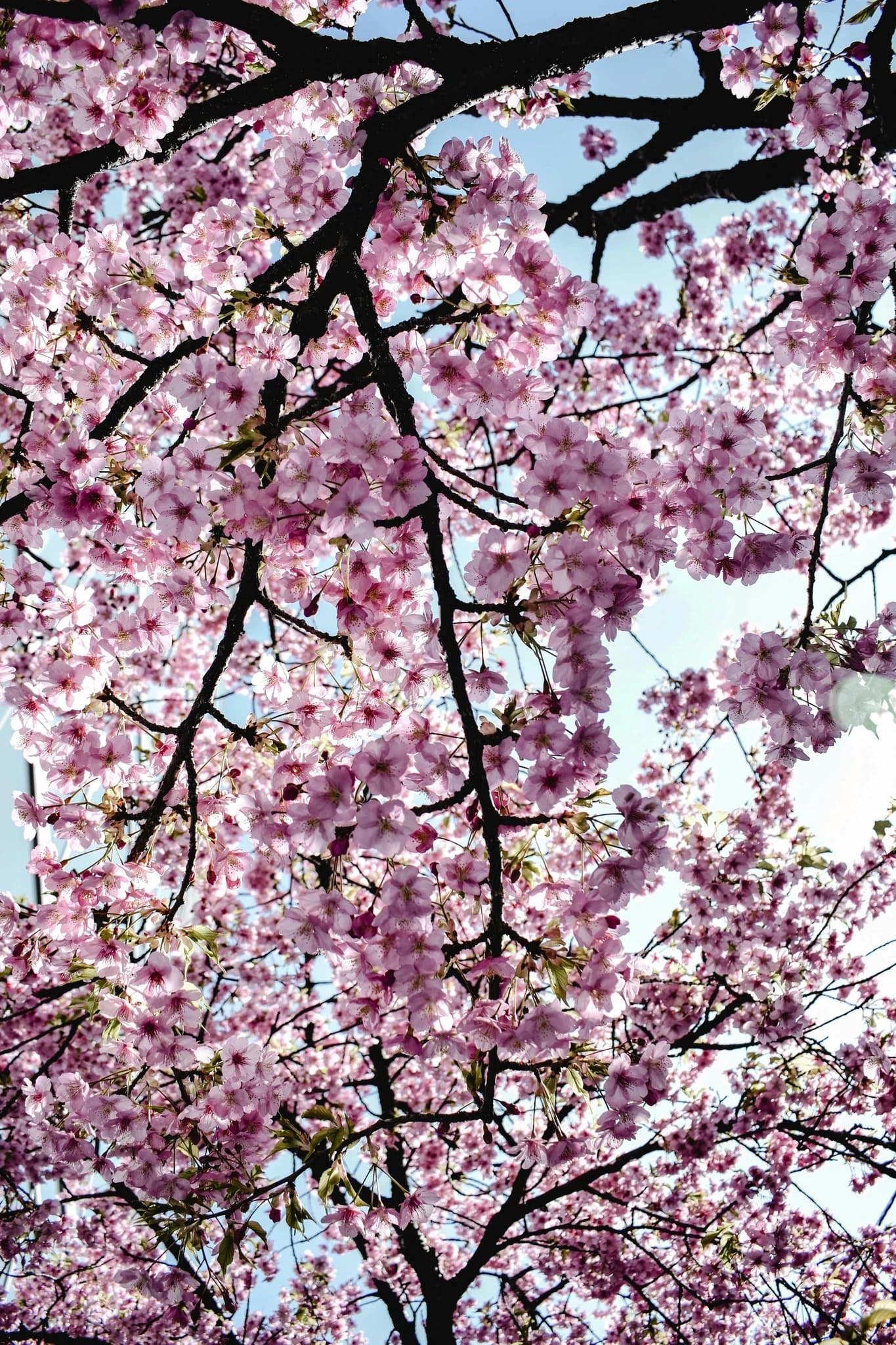
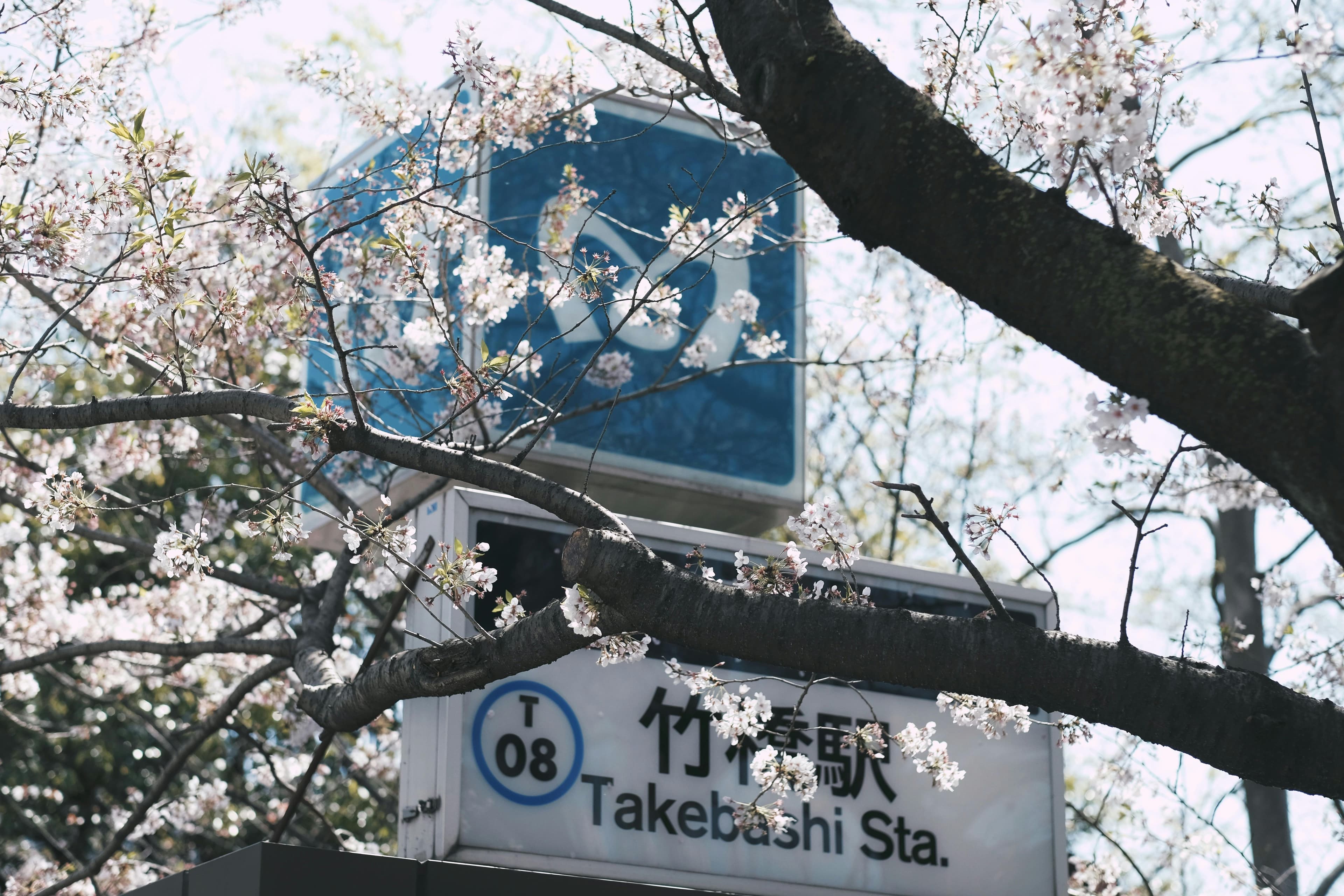
Tokyo cherry blossoms typically bloom March 22-25, hitting full bloom around March 29-April 2. The viewing window lasts about 10 days from first bloom to petal fall—compressed into essentially one week of prime viewing. If understanding cherry blossom timing across Japan matters to your planning, that forecast context helps frame Tokyo-specific booking decisions.
Everyone wants the same weekend. If full bloom hits Saturday, April 5, that weekend books 4-6 months ahead. Weekday flexibility helps slightly, but the ideal 3-4 day window overlaps for everyone.
Forecasts emerge in January but don't become reliable until 4-6 weeks before bloom when green buds appear. Even then, actual bloom can shift by several days. Book 6 months out and you're guessing. Book 6 weeks out and forecasts are accurate, but availability is severely limited.
Tokyo, Kyoto, and Osaka bloom within the same week, so there's no "chase the bloom" strategy between these cities. They're all competitive simultaneously.
Guide availability compounds with accommodation scarcity. Tokyo hotels during cherry blossom week fill 4-6 months ahead. Waiting to book your tour until you know bloom dates means you've likely missed hotel availability anyway.
Autumn Foliage (Late November-Early December)
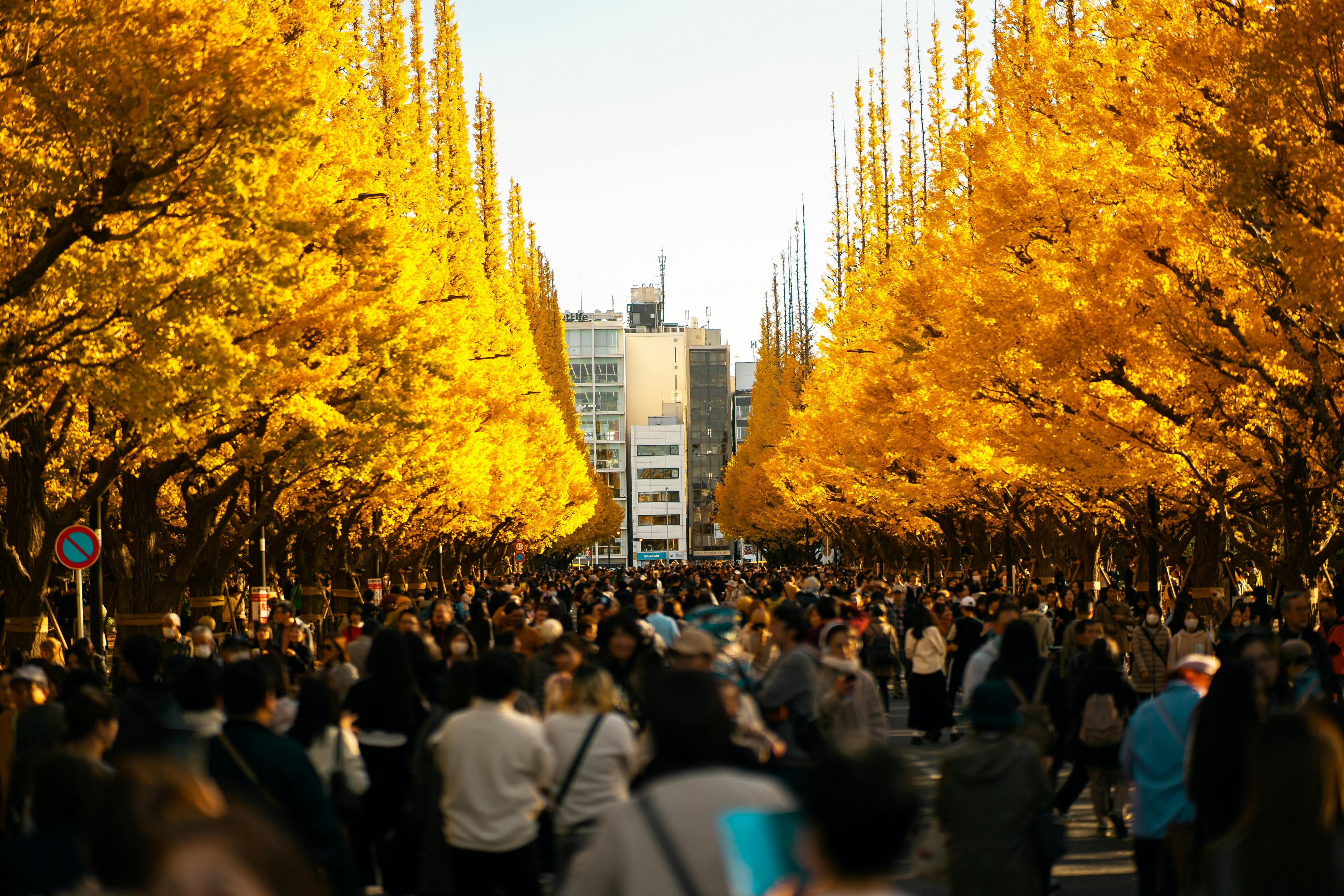
Tokyo autumn foliage peaks late November through early December—yellow ginkgo leaves around November 27, red maples around December 2. This is much later than many travelers expect (not mid-October to mid-November). For autumn foliage planning across Japan, regional timing helps contextualize Tokyo's position in the season.
Autumn is competitive but less synchronized than cherry blossoms. Foliage timing is more predictable and extends over 3-4 weeks rather than one intense week. Different elevations peak at different times: Mt. Takao in late October, central Tokyo parks late November, Meiji Jingu Gaien's famous ginkgo avenue early December.
Weekend demand still spikes, but weekday flexibility actually works. Three-month advance booking gets you good selection; six-week booking usually still works.
Golden Week (April 29-May 5)
Golden Week combines four national holidays into Japan's biggest domestic travel period. Tokyo empties as residents leave, then fills with domestic tourists. Guide availability drops as Japanese clients book far in advance for family trips.
Four-month advance booking is standard for Golden Week if you want specific guides or dates.
New Year (December 28-January 3)
Many businesses close December 28-January 3, though major tourist operations remain open. This period sees both Tokyo residents leaving and international tourists arriving. Guide availability is limited as many take personal time.
Three-month advance booking recommended.
What "Customization Time" Actually Means
The window between booking and tour date determines customization depth.
| Timeline | What Gets Done | Customization Level |
|---|---|---|
| 1-2 weeks | Detailed intake: travel style, pacing, interests beyond standard categories | Basic research and matching |
| 2-4 weeks | Venue coordination: restaurant reservations, temple access, craftsman workshops, special arrangements | Template adjustment with personalization |
| 1-2 weeks | Route optimization: mobility planning, elevator-accessible stations, transfer timing | Standard accessibility accommodations |
| 2-3 months total | Niche research: textile crafts in Nippori, jazz bars in Kichijoji, artisan workshops | Ground-up custom design |
Intake and research (1-2 weeks): Concierge team conducts detailed intake—not just "what do you want to see" but understanding travel style, pacing preferences, specific interests beyond standard categories. Research involves matching interests to actual venues, not pulling from template lists.
Venue coordination (2-4 weeks): High-end restaurant reservations in Tokyo require weeks of advance notice, especially for venues with English-speaking service. Some Michelin-starred restaurants book months ahead. Tea ceremony experiences at specific temples, craftsman workshop visits, access to normally closed shrine areas—these require relationship-based coordination that takes time.
Route optimization (1-2 weeks): Transit planning for mobility considerations matters in Tokyo. Not every station has elevators connecting all levels. Creating barrier-free routes through Tokyo's complex metro system requires checking elevator locations, transfer points, timing between connections. This isn't template work.
Niche interest research: Want to explore textile craft traditions in Nippori? Jazz bars in Kichijoji? Artisan workshops in specific neighborhoods? This research takes time because it's not standardized tourist content.
Book 2-3 months ahead and you get full customization. Book 2-3 weeks ahead and you get template adjustment—still personalized, but working from established routes rather than ground-up design. For more on how tour customization actually works, the planning process and what's realistically achievable provides useful context.
The difference isn't quality of the tour day itself. It's how specifically the itinerary matches your exact interests versus your general category of interests.
The Flexibility Trade-Off Nobody Talks About
Early booking has real downside risk.
Travel plans change: Flight times shift. Travel companions drop out or join. Hotels move neighborhoods. Health issues arise. Group size changes affect pricing and logistics. Book 6 months out and you're committing before many variables solidify.
Seasonal timing uncertainty: Cherry blossom forecasts 4-6 months ahead are essentially guessing. Peak bloom can shift by 1-2 weeks year-to-year based on winter temperatures and spring weather patterns. Book your tour for April 1 in October, and by March you might realize peak bloom will hit April 8.
Cancellation policies mitigate this—Hinomaru One's 24-hour cancellation window provides flexibility—but you still need to actively manage the booking. You can't just "set and forget."
Over-commitment reduces spontaneity: Book tours for every potential day and you eliminate space for discoveries you make during the trip. The neighborhood you stumble into on day 2 that you want to explore deeper on day 4. The restaurant recommendation from another traveler. The weather that makes indoor activities better than planned outdoor touring.
Tokyo-specific weather variables: Typhoon season peaks in September, with significant impact extending into October. Late summer/early fall bookings face weather unpredictability—not dangerous, but potentially disrupting outdoor walking tours. Tokyo summer heat (July-August) can reach 32-36°C (90-97°F) with high humidity, making afternoon walking tours uncomfortable. These seasonal considerations affect tour timing and format.
This isn't an argument against early booking. It's acknowledging that early booking trades flexibility for selection. If your plans are solid and you want specific guides/dates, book early. If your plans are still forming and spontaneity matters, waiting makes sense.
Does Booking Timing Affect Price?
The Short Answer: Usually Not
Unlike airlines and hotels, most private tour operators don't use dynamic pricing. A tour booked 4 months ahead costs the same as one booked 2 weeks ahead. The price is the price.
This differs fundamentally from travel patterns most people know. Airlines reward early booking with lower fares. Hotels surge during peak demand. Tour pricing doesn't work this way—at least not directly.
The Indirect Cost of Late Booking
Late booking doesn't change the tour price, but it changes what's available:
| Booking Window | Price Impact | Real Cost |
|---|---|---|
| 3-4 months ahead | Standard pricing | Best guide selection, full customization |
| 4-6 weeks ahead | Standard pricing | Good selection, some premium guides booked |
| 2-3 weeks ahead | Standard pricing | Limited selection, template routes more likely |
| Last week | Standard pricing (if available) | Whoever's left, minimal customization |
The tour costs the same. The experience you can buy changes based on availability.
When Prices Actually Differ
Some scenarios where timing affects what you pay:
Multi-day packages: Operators offering consecutive-day tours sometimes discount the package when booked together early. This isn't universal, but ask when booking multiple days.
Last-minute availability: Rare, but some operators discount tours with unsold availability close to the date. This is gambling—you might get a deal, or you might get nothing during peak season.
Booking platform surcharges: Third-party platforms (Viator, GetYourGuide) charge service fees. Booking direct with operators often avoids these 10-20% markups regardless of timing.
Peak season reality: Cherry blossom and autumn foliage seasons don't have higher published prices, but availability disappears. Waiting until "prices drop" doesn't work—there's nothing left to buy at any price.
The Honest Calculation
Don't book early hoping for discounts. Book early to get the guide you want, the dates you need, and the customization depth that makes the experience worthwhile. The price stays the same; the product changes based on when you commit.
Special Circumstances That Change the Math
Standard 2-4 month guidance assumes standard circumstances. Some situations require different timelines.
| Circumstance | Why It Matters | Recommended Lead Time |
|---|---|---|
| Large groups (6+) | Multiple guides, larger vehicles, venue capacity limits | 3-4 months (5-6 for peak season) |
| Consecutive multi-day tours | Blocks significant calendar time, removes 4-5 booking slots | 2-3 months (4-5 for peak season) |
| Accessibility needs | Custom route planning, elevator mapping, wheelchair vehicles, venue pre-vetting | 2-3 months minimum |
| Specific venue access | Relationship-based coordination, advance registration, temple closures | 3-6 months depending on exclusivity |
| Specialized expert guides | Architecture, modern art, traditional crafts—genuine expertise is scarce | 2-4 months |
Large groups (6+ people): Multiple guides might be needed. Transportation requires larger vehicles or multiple cars. Venue capacity becomes a factor—not every restaurant or site accommodates 8-10 people. Michelin-starred restaurants or small craft workshops might refuse groups above certain sizes. Book 3-4 months ahead minimum, 5-6 months for peak season.
Consecutive multi-day tours: Booking the same guide for 3-4 consecutive days blocks significant calendar time. Other travelers can't book those dates while you hold them. This is effectively removing 4-5 booking slots from inventory (accounting for travel days before/after). Book 2-3 months ahead for regular season, 4-5 months for peak season.
Accessibility requirements: Mobility-impaired travelers need custom route planning. Tokyo metro elevator access is limited—many stations lack elevators connecting all platform levels, and some elevators don't serve all exits. Creating truly barrier-free routes requires detailed station-by-station planning and often adds travel time. For a deeper look at accessibility considerations in Tokyo, route planning and venue access details help set realistic expectations. Wheelchair-accessible vehicles need advance arrangement. Venue pre-vetting ensures stairs, narrow passages, or other barriers don't derail the day. Book 2-3 months ahead to allow proper planning.
Specific venue access: Want to visit temples normally closed to tourists? Arrange private tea ceremony at specific location? Meet craftsmen in workshops? These require relationship-based coordination that can't be rushed. Some venues require advance registration. Book 3-6 months ahead depending on venue exclusivity.
Specialized interests requiring expert guides: Looking for deep dives into architecture, modern art scene, traditional crafts, or niche neighborhoods? Guides with genuine expertise (not just general knowledge) are scarce and book up like specialists in any field. Book 2-4 months ahead.
How to Sequence Multiple Tour Bookings
If you're planning 2-3 guided experiences during your Tokyo stay, sequencing matters.
Book your anchor tour first: Usually this is either a first-day orientation tour (helps you understand Tokyo's layout, transit system, neighborhood character) or a must-have specific experience. Lock in the non-negotiable, then build around it. For example, Tokyo Essentials works as a first-day foundation, while Infinite Tokyo suits travelers who want fully custom design from the start.
First-day orientation rationale specific to Tokyo: The transit system is complex but logical once explained. Neighborhoods have distinct characters that aren't obvious from maps. Understanding how Tokyo works spatially makes independent exploration the rest of your trip more effective.
Consider pacing and rest days: Tokyo summer heat requires rest days between intensive walking tours. Autumn and spring offer comfortable weather for consecutive touring. Families with children, older travelers, or anyone not accustomed to extensive walking should space tours with rest days.
Coordinate themes through the concierge team: If booking multiple tours through the same operator, the concierge team can ensure tours complement rather than overlap. First tour covers major neighborhoods, second tour goes deep into food culture, third explores niche interest. This prevents repetitive routing and maximizes coverage.
Booking incrementally vs. all-at-once: Booking all tours before arriving locks in dates but eliminates adjustment based on early trip discoveries. Booking incrementally (first tour before arrival, second after you've been there 2-3 days) allows responsive planning but risks availability.
If your trip is during competitive season (cherry blossoms, Golden Week), book all tours before arrival. During regular season, booking first tour before arrival and remaining tours upon arrival often works.
Last-Minute Booking: When It Works and When It Doesn't
Last-minute isn't impossible. It's limiting. For specific strategies, see how to book last-minute Tokyo tours.
| Booking Window | Regular Season | Peak Season | What to Expect |
|---|---|---|---|
| 2 weeks out | Often works | Extremely limited | Competent guide, but no selection control |
| 1 week out | Sometimes works | Rarely works | Remainder inventory only |
| 72 hours | Platform roulette | Very unlikely | Quality highly variable |
| Same-day | Rare luck | Nearly impossible | Generic group tours or lower-tier operators |
Regular season (2 weeks out): Tokyo's guide market is deep enough that two-week advance booking often succeeds during January-February, June-August, November. You won't choose your specific guide, but you'll likely get someone competent with availability.
Peak season (2 weeks out): Cherry blossom season, autumn foliage peak, Golden Week—two weeks ahead means extremely limited selection. Most established guides are fully booked. You're choosing from cancellations or newer guides building their calendars.
True last-minute (72 hours or less): This is platform roulette. Viator, GetYourGuide, and similar platforms maintain inventory of guides for last-minute bookings. Quality varies significantly. You might get excellent guide who happens to have opening, or you might get whoever accepts jobs on short notice.
Same-day booking: Mostly limited to large-group generic tours or lower-tier operators maintaining flexible inventory. Private custom tours same-day are rare and luck-dependent.
Tokyo's large guide market means last-minute isn't impossible—unlike smaller cities where guide pools are limited. But you're selecting from remainder inventory, not the full market.
Platform vs. direct booking dynamics: Platforms prioritize filling inventory over guide-client matching. Direct booking with established operators prioritizes matching over speed. Last-minute bookings through platforms are fast but impersonal. Last-minute bookings through direct operators (if they have availability) might offer better matching but have less inventory.
Frequently Asked Questions
How far ahead should I book a Tokyo private tour?
Ideal: 4-8 weeks ahead for standard dates. For peak seasons (cherry blossom, autumn foliage, Golden Week): 6-12 weeks. For specific guides you've researched: as early as possible. Last-minute is possible but limits selection.
Can I book a tour same-day in Tokyo?
Possible through aggregator platforms, but you're selecting from remainder inventory. Quality varies. Private custom tours with established operators same-day are rare—most quality guides are pre-booked. Plan at least 72 hours ahead for reasonable selection.
Is last-minute booking risky?
It's not risky in the sense of getting scammed—legitimate platforms protect you. The risk is quality: you get whoever happens to be available, not necessarily who's best suited for you. Last-minute works if you're flexible; it fails if you have specific needs.
What if my plans change after booking?
Check cancellation policies before booking. Most operators offer free cancellation 24-72 hours before. Some allow changes to dates/times without penalty. Book early, then adjust if needed—better than scrambling last-minute.
When do tours fill up?
Cherry blossom season (late March-early April) and autumn foliage (November) book 6-8 weeks ahead. Golden Week (late April-early May) fills similarly. Regular dates maintain better availability—2-4 weeks ahead usually finds options.
Where Hinomaru One Fits
Some travelers want maximum selection control and deep customization but worry about being locked into inflexible bookings. Others want to show up and book spontaneously without any planning overhead. Hinomaru One serves the first group, not the second.
The booking system shows real-time guide availability—when you select dates, you're seeing actual calendar openings, not request-based "we'll try to find someone" availability. Book and you get instant confirmation with your specific guide's name. No 24-48 hour waiting period to see if availability exists.
The calendar opens 12 months ahead, which matters for milestone trips, family reunions, or coordinating multiple parties. Most operators cap at 6 months.
The 24-hour cancellation policy (full refund up to 24 hours before tour) mitigates early-booking risk. You can book months ahead to secure specific guides and prime dates, then cancel penalty-free if plans change. This trades "pure flexibility" (booking same-day) for "controlled flexibility" (booking early but maintaining exit option).
The concierge team operates separately from guides. Guides focus on tour delivery; the concierge team handles booking, customization, coordination, and rescheduling. This means schedule changes don't compete with tour commitments, and planning questions get answered without waiting for guide availability.
This model works if you:
-
Want specific guide selection rather than whoever's available
-
Value extensive customization time (venue coordination, special access, detailed planning)
-
Need booking certainty (instant confirmation) rather than request-and-wait
-
Prefer cancellation flexibility over pure spontaneity
It's not optimal if you:
-
Want to show up and book same-day tours
-
Prefer platform aggregation (comparing many operators simultaneously)
-
Prioritize minimum-price budget options over specialized service